
On this page
What a cleaning includes
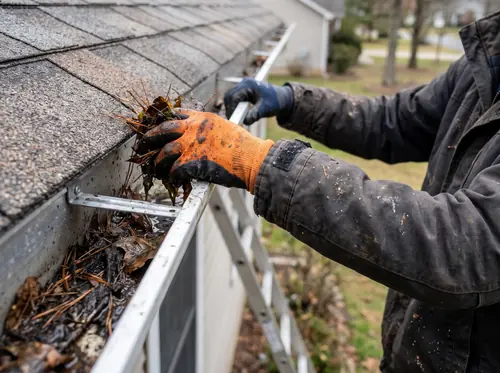
- Debris removed from the trough by hand and bagged, not thrown onto the beds.
- Outlets cleared and downspouts flushed with a hose; blocked downspouts opened or taken apart.
- Water run along each section to check pitch and spot leaks.
- Hangers, corners, straps and extensions checked.
- A short note of anything that needs repair.
The Madison calendar
| Season | What comes down | What it does to gutters |
|---|---|---|
| Spring (April to May) | Maple flowers and seeds, oak catkins, elm seeds | Packs outlets; seeds sprout in wet gutters |
| Early summer (June) | Cottonwood and willow fluff near water, more seeds | Felts over guards and outlets in the wettest month |
| Fall (October to November) | Maple, ash, linden and oak leaves; honeylocust leaflets | The big load; oaks finish last |
| Winter (December to March) | Snow, ice, roof grit | Ice blocks outlets; grit settles in troughs |
June is the wettest month at the airport, with a normal 5.28 inches of precipitation. A gutter half full of seeds going into June is the one that overflows in the first big thunderstorm.
Before winter
The late-fall cleaning is the one that matters most here. Clear gutters let meltwater run off during a thaw instead of freezing in place. The National Weather Service's ice-dam advice starts with cleaning leaves and debris from gutters and downspouts so melting snow can drain, and keeping them clear of snow and icicles through the winter.
A few things to check at the same time:
- Downspout extensions that were pulled off for mowing should go back on before snow. Meltwater at the foundation is a common cause of basement seepage in March.
- Splash blocks that have tipped back toward the house should be reset.
- Hangers that are loose should be fixed now; an ice load will finish them off.
- Attic signs: if last winter brought big icicles or stained ceilings, this is the time to book an energy assessment. See ice dams and gutters.
Do it yourself safely
- Use a stable extension ladder on firm, level ground, with a stand-off so it does not rest on the gutter.
- Never work near overhead power lines.
- Do not climb on icy or wet roofs.
- Scoop by hand or with a plastic scoop, then flush with a hose from the far end toward the outlet.
- Do not use a pressure washer on shingles.
Cleaning or guards?
If you are paying for two or three cleanings a year on a tall house under trees, compare that with micro-mesh guards. See how often to clean gutters and are gutter guards worth it?.
Cleaning and guard maintenance
If you already have guards, cleaning means brushing off the top, checking for debris that got underneath, flushing downspouts and checking hangers. It is quicker than a full cleaning, but still worth doing once or twice a year under heavy trees.
What not to do
- Do not lean a ladder on the gutter; use a stand-off.
- Do not walk on a wet or icy roof.
- Do not pressure-wash shingles.
- Do not dump debris into the storm drain; bag it or compost it.