
On this page
Common commercial jobs
| Building | Typical drainage | Common problem |
|---|---|---|
| Brick block on the Capitol Square or State Street | Flat roof, parapet, scuppers, conductor heads | Ice-split conductor heads, stained masonry |
| Apartment building on the isthmus | Hung K-style or box gutters, long downspouts | Downspouts crushed at street level; ice on walkways |
| Church | Steep roof, half-round or built-in gutters | High, hard-to-reach runs; failed box gutter linings |
| Strip mall or office on the far west or east side | Large K-style or box gutters | Undersized outlets; ice at entrances |
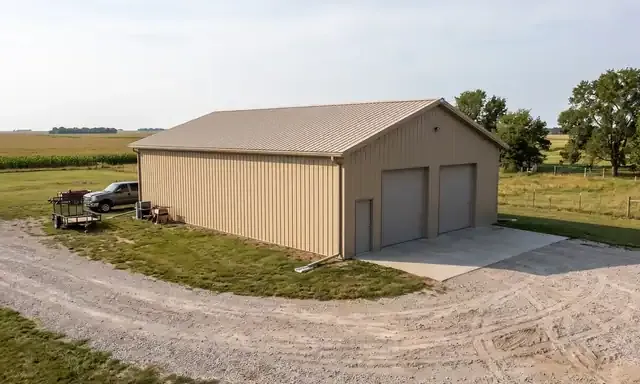
| Warehouse, shed or farm building | Large box gutters, 4x5 or 6-inch downspouts | Sliding snow off metal roofs |
Ice at entrances
On commercial property the biggest gutter risk in Madison is often not the building but the people walking past it. A downspout that empties across a sidewalk or parking area turns into a sheet of ice on the first cold night after a thaw. Rerouting downspouts away from entrances, extending them under walks in a pipe, or adding a drain is cheaper than salting and liability.
Built-in gutters and scuppers
Many older buildings downtown and in the Mansion Hill and Third Lake Ridge areas have gutters built into the cornice or flat roofs that drain through the parapet. When a built-in lining fails, water goes into the wall rather than over the edge, and the leak can show up a floor or two down. Repairs usually mean relining with new metal or a membrane, rebuilding conductor heads, and replacing corroded downspouts. In a local historic district, the Landmarks Commission may review changes to the cornice or gutter profile.
Stormwater on larger sites
Commercial and multi-unit properties in the city pay a stormwater charge based on impervious area. The 2026 schedule lists an impervious area charge of about $3.59 per 1,000 square feet a month. Since the 2018 floods the city has tightened its stormwater ordinance for development and redevelopment. A gutter contractor will not redesign a site's drainage, but they should know where your downspouts are meant to tie in and avoid routing roof water where it was never designed to go.
Snow off metal roofs
Metal roofs on warehouses, farm buildings and newer commercial buildings shed snow in sheets. A gutter on the eave below can be ripped off in one slide. Common answers are snow guards on the roof, gutters set low on the fascia so snow clears them, heavier hangers and box gutters, or no gutter at all on some eaves with a drainage strip below.
Questions to ask a commercial contractor
- What gutter and downspout sizes do you propose, and how did you size them?
- Will any downspout empty across a walk, ramp or parking area?
- How will you keep entrances safe and open during work?
- Do you carry liability and workers' compensation insurance? Send the certificates.
- Do you offer scheduled maintenance, including a pre-winter check?
Maintenance plans
For commercial buildings, a scheduled maintenance plan often costs less than emergency calls. A typical plan includes:
- A late-fall inspection and cleaning before freeze-up.
- A spring inspection after the thaw for ice damage.
- Clearing scuppers and conductor heads.
- A written condition report with photos.
Snow and liability
Ice under downspouts at entrances is a liability. Document what you have done to reroute water away from walks, and keep records of maintenance.